


 2-3 / 104

3
The myGREIFF code provides all the important infor-
mation about every single product.
You can find it on a label on your garment. With the
aid of the myGREIFF code, you can trace the whole
process that went into making your product – from the
fibre to the finished item of clothing. You can see
where the raw materials used for your product came
from and where they were processed. You will also
receive reports on the manufacturing facility audits
completed by the Fair Wear Foundation and see
what certifications your garment and our production
partners hold.
myGREIFF-Code:
We know exactly where each of our products comes from.
Almost every company is now committed to sustainability and responsible business practices, so it makes
sense that corporate wear has to be ethically produced too. If you choose GREIFF, you can be confident that
we select our production partners with just as much care as all the materials we use.
We only use producers who guarantee fair, safe and respectful working conditions for their employees,
conserve energy and raw materials, and work with us to meet the highest standards of quality. That is why we
are a member of the Fair Wear Foundation, which is committed to improving workplace conditions at manu-
facturing facilities. We only use high-quality materials which contain no harmful substances – all of which meet
the requirements of STANDARD 100 by OEKO-TEX
®
.
With GREIFF, you can rest assured
that everything is produced in a
fair and sustainable
fashion.
Our responsibility starts with
farming and trade.
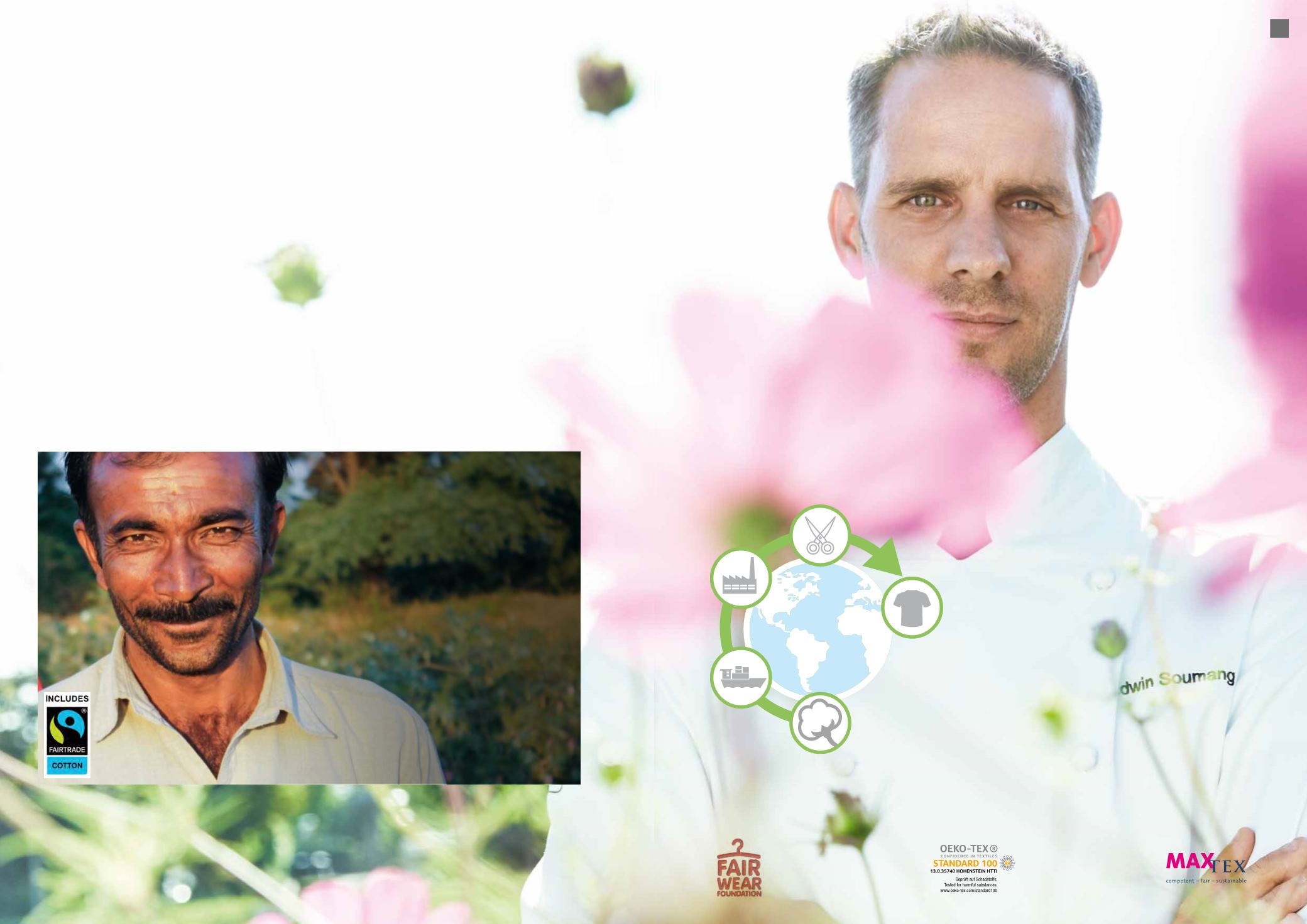
All of the cotton used for the GREIFF collections
CUISINE
EXQUISIT
and
CUISINE PREMIUM
is certified by
Fairtrade. This cotton comes from small-scale farming
organisations that meet Fairtrade environmental, eco-
nomic and social standards.
Fairtrade makes long-term improvements to the lives of
cotton growers’ families. It gives farmers the security of
knowing they can sell their cotton for a fixed minimum
price, so their production costs are always covered. The
farming communities also receive a Fairtrade premium
which they can invest in community projects such as the
construction of a school or a well.
For up-to-date information about responsibility in practice
at GREIFF, visit:
www.greiff.dePicture: TransFair e. V. / Anand Parmar